


When Apple unveiled the iPad Pro M5, the headlines were predictable: “Faster,” “More Powerful,” “Built for the Future.” And sure, that’s all true. The M5 chip is a marvel — faster CPU, smarter Neural Engine, and Wi-Fi 7 for next-level connectivity.
But after the first wave of benchmarks and speed tests fade, one thing becomes clear: the real revolution isn’t happening inside the chip — it’s happening in how people use the iPad.
A Tablet That Thinks Like a Laptop
Apple’s newest iPad Pro isn’t trying to be just a tablet anymore. With the M5 processor and up to 16GB of unified memory, it’s finally capable of the kind of multitasking you’d expect from a MacBook. You can edit 4K video, work across multiple apps, and even run AI-driven creative tools in real time.
And yet, this power only matters if the device fits seamlessly into your daily life. The iPad’s transformation isn’t just technological — it’s contextual. It’s about how it adapts to your workflow, your workspace, and your creativity.
That’s why accessories now matter more than ever.
Why Accessories Define the M5 Era
When Apple keeps the same physical design across generations — like it did with the M4 and M5 — it’s a signal. The hardware has matured. The real frontier now is experience.
Think about it: the last big leap for the iPad wasn’t a chip — it was the introduction of the Magic Keyboard, which turned a tablet into a laptop replacement. The same logic applies today. With the M5’s power ceiling so high, the next step forward is how you interact with that performance.
- The right keyboard can turn your iPad into a productivity powerhouse.
- The right stylus turns it into a creative studio.
- And the right case transforms it into a fully functional workstation — portable, stable, and protected.
Design Matters More Than Ever
Here’s where things get interesting. Apple’s obsession with thinness and minimalism yields beautiful hardware — but it also means users must think more critically about protection and usability.
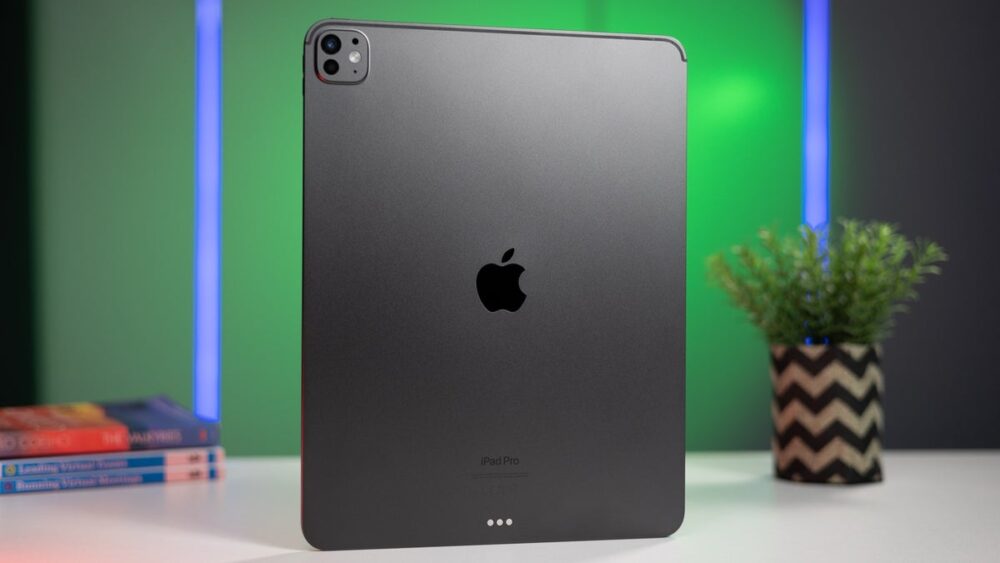
The iPad Pro M5 is barely over 5mm thick. It’s light, elegant, and… fragile. A generic plastic shell might keep it safe from scratches, but it won’t help you actually use it effectively. That’s where functional design steps in.
Cases are no longer just about protection — they’re about performance.
The Rise of the “Performance Case”
Enter the new class of cases engineered specifically for how modern users work — like the ZUGU 360 Case.
It’s not a “case” in the old sense. It’s a flexible workstation:
- Dual orientation support for both vertical and horizontal use.
- Multiple stand angles for drawing, editing, or watching.
- Magnetic stability that’s strong enough to mount to a metal surface.
- And a reinforced fiberglass frame that matches Apple’s minimalist aesthetic while surviving real-life use.
When you pair an iPad Pro M5 with a case like that, it becomes something different entirely. You’re no longer “using” a tablet — you’re working with it.
The Creative Freedom Factor
Source: macworld.com
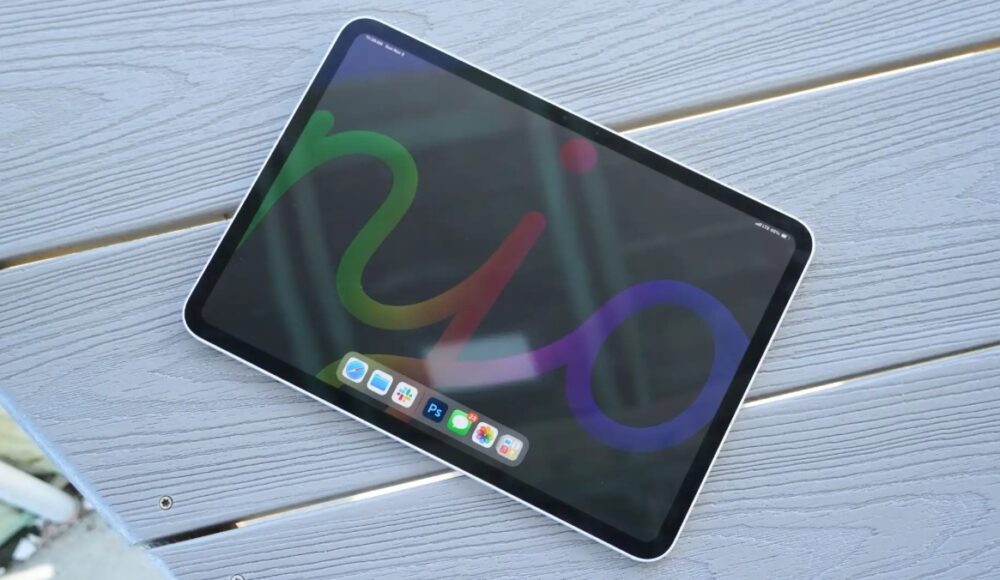
For digital artists, photographers, and designers, the M5’s power is liberating — but only if the device can stay steady and comfortable. Try shading or precision sketching on a flat table without a stable base, and you’ll see why the case design matters.
The iPad’s OLED display is finally worthy of true-to-life visuals, but it also deserves ergonomic support. The ZUGU 360 Case, for instance, holds its position even when applying pencil pressure — a small detail that makes a huge difference during long creative sessions.
It’s this kind of design thinking — balancing form and function — that defines what the iPad experience looks like in 2025.
A Minimalist’s Dream – The Modular Setup
What’s happening now in the iPad ecosystem mirrors the broader trend in tech: modular minimalism.
Instead of buying one “big” device that does everything, users are building ecosystems — smaller, specialized tools that connect fluidly.
With the iPad Pro M5 at the center, you might have:
- A ZUGU case for protection and angle control.
- A Magic Keyboard for typing.
- An Apple Pencil 2 for creativity.
- A USB-C hub for storage and display expansion.
Together, these elements turn the M5 into a laptop, a canvas, a TV, and a production studio — all depending on what you’re doing.
That’s why it’s not the chip that defines the era — it’s the accessories that unlock its potential.
The Future of the iPad Is Contextual
Source: phonearena.com
Apple doesn’t need to reinvent the iPad every year anymore. The M5 is proof of that. The hardware is already world-class. What’s evolving now is the context of use.
As AI tools become native to iPadOS and remote work and creative mobility continue to dominate, the way we interact with our devices will matter far more than the number of cores they have.
The iPad’s real strength is flexibility — and every piece of its ecosystem that enhances that (like cases, stands, and keyboards) plays a part in shaping the next wave of computing.
The Case for Thinking Beyond the Chip
The M5 is the most capable iPad ever built. But capability doesn’t equal usability.
That’s why the quiet heroes of this generation aren’t just processors or pixels — they’re the accessories that make the experience seamless.
If you’re buying the iPad Pro M5 for productivity, creativity, or travel, don’t stop at the chip. Think about how you’ll use it, where you’ll use it, and how you’ll protect it.
Because sometimes, the smartest upgrade isn’t inside the tablet — it’s the one wrapped around it.
Explore the ZUGU Case for iPad Pro M5 — built for creators, professionals, and anyone who expects their tech to work as hard as they do.